What are Rahu and Ketu?
In modern astronomy they are called the lunar nodes — the two points where the Moon's orbital plane intersects the Sun's apparent path around the sky (the ecliptic). The north node is called Rahu (ராகு) and the south node is called Ketu (கேது). They are not physical objects — they are geometric points in space, always exactly 180° apart, slowly drifting backwards (retrograde) through the zodiac.
The remarkable fact is this: the lunar nodes directly and precisely predict eclipses. An eclipse can only occur when the Moon is both near a node AND near the Sun (new moon for solar eclipse) or opposite the Sun (full moon for lunar eclipse). Rahu and Ketu are the eclipse engine of the solar system — and ancient Tamil astronomers recognised this with complete mathematical precision.
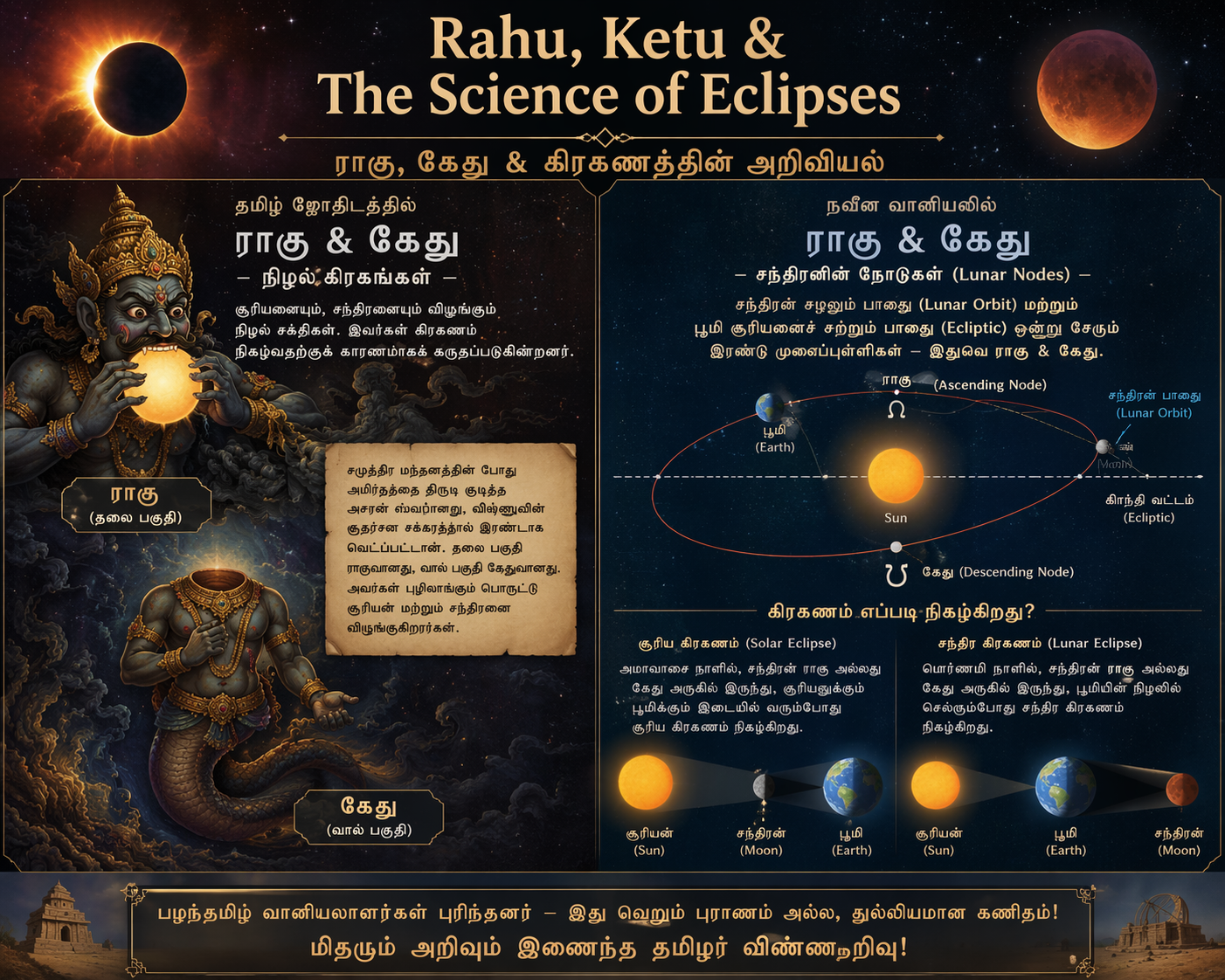
Why Eclipses Only Happen at the Nodes
The Moon's orbit is tilted approximately 5.1° relative to the ecliptic. This tilt means that during most new moons, the Moon passes slightly above or below the Sun and no eclipse occurs. Similarly, during most full moons, the Moon's shadow misses the Earth.
Eclipses only occur when the Moon is near a node — within about 5° for a total eclipse, up to 17° for a partial eclipse. Since the Sun takes one year to travel the full ecliptic, it passes through each node roughly twice per year, creating two eclipse seasons per year spaced about 6 months apart. During each eclipse season, one or two eclipses occur depending on the precise alignment.
The Saros Cycle — Predicting Eclipses
One of the great achievements of ancient astronomy was the discovery of the Saros cycle — a period of approximately 18 years, 11 days, and 8 hours after which solar and lunar eclipses repeat in nearly identical patterns. The Saros cycle was known to Babylonian astronomers by ~700 BCE and was likely known in Tamil astronomical tradition by the time of the Siddhanta texts (499–600 AD).
The Saros cycle emerges because it is almost exactly:
- 223 synodic months (new moon to new moon) = 6,585.32 days
- 242 draconic months (node to node) = 6,585.36 days
- 239 anomalistic months (perigee to perigee) = 6,585.54 days
When all three match simultaneously, the geometry of Sun, Moon, and nodes returns to almost the same configuration — producing a nearly identical eclipse.
Rahu Kalam — The Daily Inauspicious Period
Every day in the Tamil Panchangam contains a period called Rahu Kalam (ராகு காலம்) — a ~90-minute window considered inauspicious for starting new ventures. The timing shifts by weekday:
| Weekday | Rahu Kalam (approx., 6 AM–6 PM day) |
|---|---|
| Sunday | 4:30 PM – 6:00 PM |
| Monday | 7:30 AM – 9:00 AM |
| Tuesday | 3:00 PM – 4:30 PM |
| Wednesday | 12:00 PM – 1:30 PM |
| Thursday | 1:30 PM – 3:00 PM |
| Friday | 10:30 AM – 12:00 PM |
| Saturday | 9:00 AM – 10:30 AM |
Astronomically, Rahu Kalam has no direct correspondence to the actual position of the lunar nodes on a given day — it is a traditional timing system derived from the node's mythological associations with shadow and obscuration, applied as a fixed daily schedule.
The Myth of Rahu Swallowing the Sun
The Tamil mythological explanation for eclipses is vivid and precise in its own way. Rahu is depicted as a serpent-demon who periodically swallows the Sun or Moon, causing an eclipse. The Sun or Moon are then "released" from the serpent's grasp — which is why eclipses end after a short time. This myth is an elegant metaphor: the node (Rahu) literally intercepts the Sun or Moon at the moment of eclipse. The "swallowing" is the shadow; the "release" is the alignment passing.
Grahan — Tamil Eclipse Traditions
In Tamil tradition, a solar or lunar eclipse (Grahan — கிரகணம்) is a spiritually significant event. Traditional practices during Grahan include:
- Fasting before the eclipse and breaking fast after it ends
- Bathing in a river or sea before and after (the Cauvery and coastal temples see huge crowds during eclipses)
- Charitable giving — eclipse periods are considered powerful times for dana (donation)
- Avoiding food preparation during the eclipse itself (though modern hygiene science finds no reason for this)
- Chanting mantras — particularly the Navagraha stotras to Rahu and Ketu
Ancient Tamil astronomers understood eclipse prediction mathematically. The Surya Siddhanta and Aryabhatiya texts contain precise formulae for calculating when the Moon would be near a node and hence when an eclipse would occur. The "Rahu swallows the Sun" mythology and the precise mathematical eclipse prediction existed simultaneously — the myth was the popular teaching, the mathematics was the technical knowledge. Both were true in their own domains.
ராகு கேது என்றால் என்ன?
ராகு மற்றும் கேது கோள்கள் அல்ல — இவை நிலவின் சுற்றுப்பாதை பூமியின் சுற்றுப்பாதையை கடக்கும் இரண்டு புள்ளிகள். இந்த புள்ளிகளை நிலவு கணுக்கள் (Lunar Nodes) என்கிறோம்.
கிரகணம் ஏன் நிகழ்கிறது
நிலவு பூமியை 29.5 நாட்களில் சுற்றுகிறது. ஆனால் ஒவ்வொரு அமாவாசையிலும் சூரிய கிரகணம் நிகழ்வதில்லை — ஏன்? ஏனென்றால் நிலவின் சுற்றுப்பாதை பூமியின் சுற்றுப்பாதையிலிருந்து 5 டிகிரி சாய்ந்துள்ளது. நிலவு ராகு அல்லது கேது புள்ளியில் இருக்கும்போது மட்டுமே கிரகணம் நிகழும்.
18 ஆண்டு சாரோஸ் சுழற்சி
ராகு மற்றும் கேது புள்ளிகள் நிலவின் சுற்றுப்பாதையில் மெல்ல நகர்கின்றன — 18.6 ஆண்டுகளில் ஒரு முழு சுற்று. இதனால் கிரகணங்கள் 18 ஆண்டுகளுக்கு ஒரு முறை திரும்பவும் நிகழும். இந்த சுழற்சியை சாரோஸ் சுழற்சி என்கிறோம் — தமிழ் வானியலில் 18 மெய்யெழுத்துக்களில் இந்த எண் மறைத்து வைக்கப்பட்டுள்ளது.
ராகு காலம் மற்றும் கேது காலம்
தமிழ் பஞ்சாங்கத்தில் ராகு காலம் மற்றும் குளிகை காலம் ஒவ்வொரு நாளும் கணக்கிடப்படுகின்றன. இந்த நேரங்களில் ராகு கேது கோண நிலையில் இருக்கும் என்பதால் புதிய காரியங்கள் துவங்குவது விரும்பத்தக்கதல்ல என்று நம்பிக்கை.
நவீன அறிவியல்: நாசா இன்று சாரோஸ் சுழற்சியைப் பயன்படுத்தி நூற்றாண்டுகள் முன்னதாகவே கிரகணங்களை கணிக்கிறது. இதே கணக்கை தமிழ் வானியலாளர்கள் ஆயிரக்கணக்கான ஆண்டுகளுக்கு முன்பே கண்டுபிடித்திருந்தனர்.