
Why Does the Moon Not Eclipse the Sun Every Month?
This is one of the most intuitive questions in astronomy, and ancient Tamil observers asked it thousands of years before modern science answered it.
The Moon orbits Earth once every 29.5 days. The Sun sits along the same ecliptic plane. So why doesn't a solar eclipse happen every single New Moon? The answer is that the Moon's orbital plane is tilted approximately 5° relative to the ecliptic. Most of the time, the New Moon passes slightly above or below the Sun rather than directly in front of it.
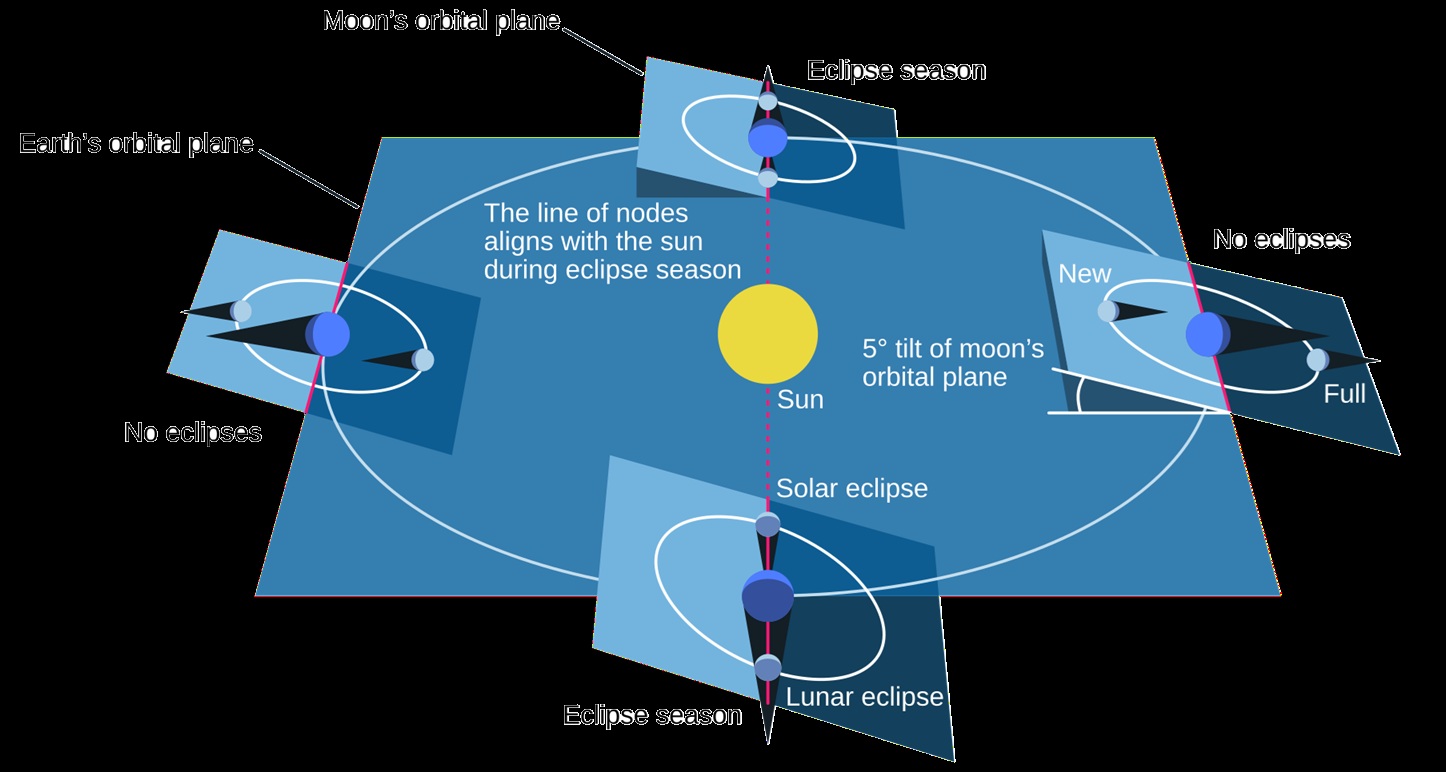
Eclipses only occur when the New Moon (for solar eclipse) or Full Moon (for lunar eclipse) happens to fall near one of two special points — the points where the Moon's orbital plane intersects the ecliptic. These points are called the lunar nodes, known in Tamil tradition as Rahu and Ketu.
The Slow Retrograde — Why the Nodes Move
The nodes are not fixed in space — they slowly drift backward (retrograde) through the zodiac due to gravitational influences from the Sun and planets. This is the nodal precession of the Moon, and its cycle is exactly:
18.6 years
(223 synodic months = 242 draconic months — the Saros cycle)
This means that after exactly 18.6 years, the Moon's nodes return to the same position in the zodiac — and eclipse patterns repeat almost identically. This cycle is called the Saros cycle in modern astronomy, and it allows precise prediction of solar and lunar eclipses centuries in advance.
The 18 Months Per Zodiac Sign
The tradition in Vinniyalum Vazhviyalum explains the consonant count through a specific calculation: because the Moon's node moves retrograde, it takes approximately 18 months for the node to pass through one zodiac sign (30° of arc).
The derivation is straightforward:
| Measurement | Value | Calculation |
|---|---|---|
| Node's daily retrograde motion | ~0.053° per day | 360° ÷ 6,793 days (full nodal cycle) |
| Days to cross one zodiac sign (30°) | ~566 days | 30° ÷ 0.053° per day |
| Months to cross one zodiac sign | ~18 months | 566 ÷ 29.5 days = 19.2 → rounded to 18 in the Tamil system |
| Time to cross all 12 signs | 18 years | 18 months × 12 signs = 216 months = 18 years |
The Tamil tradition uses the round number 18 as the base: 18 months per sign × 12 signs = 216 months = 18 years — the full nodal cycle. And 18 is also the number of Tamil consonants.
The Consonants as a Zodiac Map
The 18 Tamil consonants (மெய் எழுத்துக்கள்) are not randomly ordered. They are grouped in five families based on where in the mouth they are articulated — and the Tamil tradition maps these five families to the five classical elements and to specific body organs.
But the claim in Vinniyalum Vazhviyalum goes further: the 18 consonants also correspond to the 18 months of the Moon's nodal journey through one zodiac sign — effectively encoding the eclipse prediction cycle in the alphabet itself.
| Consonant Family | Members | Count | Articulation | Classical Element |
|---|---|---|---|---|
| Vallinam (hard) | க, ச, ட, த, ப, ற | 6 | From the chest (strong stops) | Fire · Earth |
| Mellinam (soft) | ங, ஞ, ண, ந, ம, ன | 6 | From the nose (nasals) | Water · Air |
| Idaiyinam (medium) | ய, ர, ல, வ, ழ, ள | 6 | From the throat (semi-vowels) | Space · the 6 chakras |
| Total | 18 | One for each month of the Moon's nodal passage through a zodiac sign | ||
The six Idaiyinam consonants (ய, ர, ல, வ, ழ, ள) are specifically identified in the tradition as encoding the six chakra points in the body — and simultaneously mapping the six Nakshatras visible in each zodiac sign as the Moon's node passes through.
Rahu's Name — Given in Murugan's Era
One of the most specific historical claims in this tradition concerns the naming of Rahu — the ascending lunar node. The text states:
"In Murugan's time, the astronomers knew [the nodal cycle] but did not give it a name. It was only in Thirumal's era (the Third Tamil Sangam, approximately 3,600 years ago), when the Panchangam was being formalised, that the node was given the name Rahu."
This is interesting because it implies the astronomical phenomenon of the nodal cycle was discovered and tracked for thousands of years before it was given its current Sanskrit-influenced name. The concept was Tamil; the name Rahu came later with the Sanskrit astronomical tradition's influence on the Third Sangam period.
How the Saros Cycle Was Used — The Temple Observatory Technique
Vinniyalum Vazhviyalum describes how Murugan's era astronomers actually used the 18-year cycle in practice. The method was sophisticated and institutionalised:
The 64 Aiyar-kala arts (the 64 classical disciplines) were taught in temple schools (Koil Mandapam) specifically so that each new generation of astronomers would have the skills to observe and record. Crucially, the 18-year nodal cycle means that an individual astronomer, working over a single career lifetime, would observe approximately 3–4 complete cycles — enough to confirm the prediction and refine it.
The Brihadeeshwara Temple at Thanjavur — which the text specifically mentions — is built with this astronomical function in mind. Its shadow geometry is described as encoding the Moon's nodal passage, allowing priests to track the approach of eclipse seasons without any calculation — simply by observing the temple's shadow pattern at specific times of year.

The Eclipse Prediction Record
The tradition makes the remarkable claim that Tamil astronomers could predict eclipses long before the Sanskrit astronomical texts formalised the method. The evidence offered is the calculation precision itself: to know that the nodal cycle is 18 years requires recording hundreds of eclipses across multiple generations — a level of institutional memory and record-keeping that the text attributes to the temple school system.
The Kurinchai (mountain) hermitages — of which Pothigai Mountain is the most famous — are described as the first astronomical observatories. Their high-altitude locations, away from coastal light and humidity, would have provided ideal sky conditions. Agastya, described as the teacher at Pothigai Mountain, is credited in this tradition with formalising the eclipse prediction records into a system that could be handed down through the temple schools.
The Number 216 — The Compound Letters' Deeper Meaning
The 216 compound Tamil letters (உயிர்மெய் எழுத்துக்கள்) are formed by combining each of the 12 vowels with each of the 18 consonants: 12 × 18 = 216.
In the astronomical reading, 216 months = 18 years — the full nodal cycle expressed in months. But the tradition identifies a third meaning: the Sun travels at approximately 216 km/s toward the galactic centre. Three things encoded in the same number — the compound letter count, the nodal cycle in months, and the Sun's galactic speed.
The 18-consonant mnemonic: Ancient Tamil schoolchildren who learnt the 18 consonants were — unknowingly or knowingly — memorising the number at the heart of the most important cycle in eclipse prediction. Every time a Tamil student recites "க ச ட த ப ற — ங ஞ ண ந ம ன — ய ர ல வ ழ ள", they carry a 20,000-year-old astronomical observation inside the alphabet itself.
ஒவ்வொரு அமாவாசையிலும் கிரகணம் ஏன் நிகழ்வதில்லை?
நிலவு 29.5 நாட்களில் ஒரு சுற்று முடிக்கிறது. சூரியன் ஒரே நேர்கோட்டில் இருக்கிறது. ஆனால் ஒவ்வொரு அமாவாசையிலும் சூரிய கிரகணம் நிகழ்வதில்லை — ஏனென்றால் நிலவின் சுற்றுப்பாதை 5 டிகிரி சாய்ந்துள்ளது. சூரியன், பூமி, நிலவு — இம்மூன்றும் ஒரே நேர்கோட்டில் வரும்போது மட்டுமே கிரகணம் நிகழும்.
18 மெய்யெழுத்துக்கள் — 18 ஆண்டு சுழற்சி
தமிழில் மெய்யெழுத்துக்கள் 18. நிலவின் கணு (Node) முழு சுழற்சி 18.6 ஆண்டுகள். ஒவ்வொரு ராசியிலும் கணு நகர்வதற்கு 18 மாதங்கள். இந்த 18 என்ற எண் தமிழ் மெய்யெழுத்துக்களில் உள்ளடக்கப்பட்டுள்ளது.
மூன்று மெய்யெழுத்து குடும்பங்கள்
வல்லினம் (க ச ட த ப ற — 6 எழுத்துக்கள்): மார்பிலிருந்து ஒலிக்கும் — வலிய ஒலிகள். மெல்லினம் (ங ஞ ண ந ம ன — 6 எழுத்துக்கள்): மூக்கிலிருந்து ஒலிக்கும் — மென்மையான ஒலிகள். இடையினம் (ய ர ல வ ழ ள — 6 எழுத்துக்கள்): தொண்டையிலிருந்து ஒலிக்கும் — இடைப்பட்ட ஒலிகள்.
கோயில் நிழல் கணக்கீடு
தஞ்சாவூர் பிரகதீஸ்வரர் கோயில் உள்பட பல தமிழ் கோயில்கள் இந்த 18 ஆண்டு சுழற்சியை கணக்கில் கொண்டு கட்டப்பட்டுள்ளன. குறிப்பிட்ட நேரங்களில் கோயிலின் கோபுரத்தின் நிழல் நிலையைக் கொண்டு கிரகண காலங்களை முன்கூட்டியே அறிந்துகொள்ள முடியும் என்று மரபு கூறுகிறது.
ராகு என்ற பெயர்: முருகன் காலத்தில் நிலவு கணு என்ற நிகழ்வை அறிந்திருந்தாலும், "ராகு" என்ற பெயர் திருமால் காலத்தில் (மூன்றாம் தமிழ் சங்கம்) பஞ்சாங்கம் உருவாகும்போதுதான் வழக்கத்துக்கு வந்தது என்று விண்ணியலும் வாழ்வியலும் கூறுகிறது.