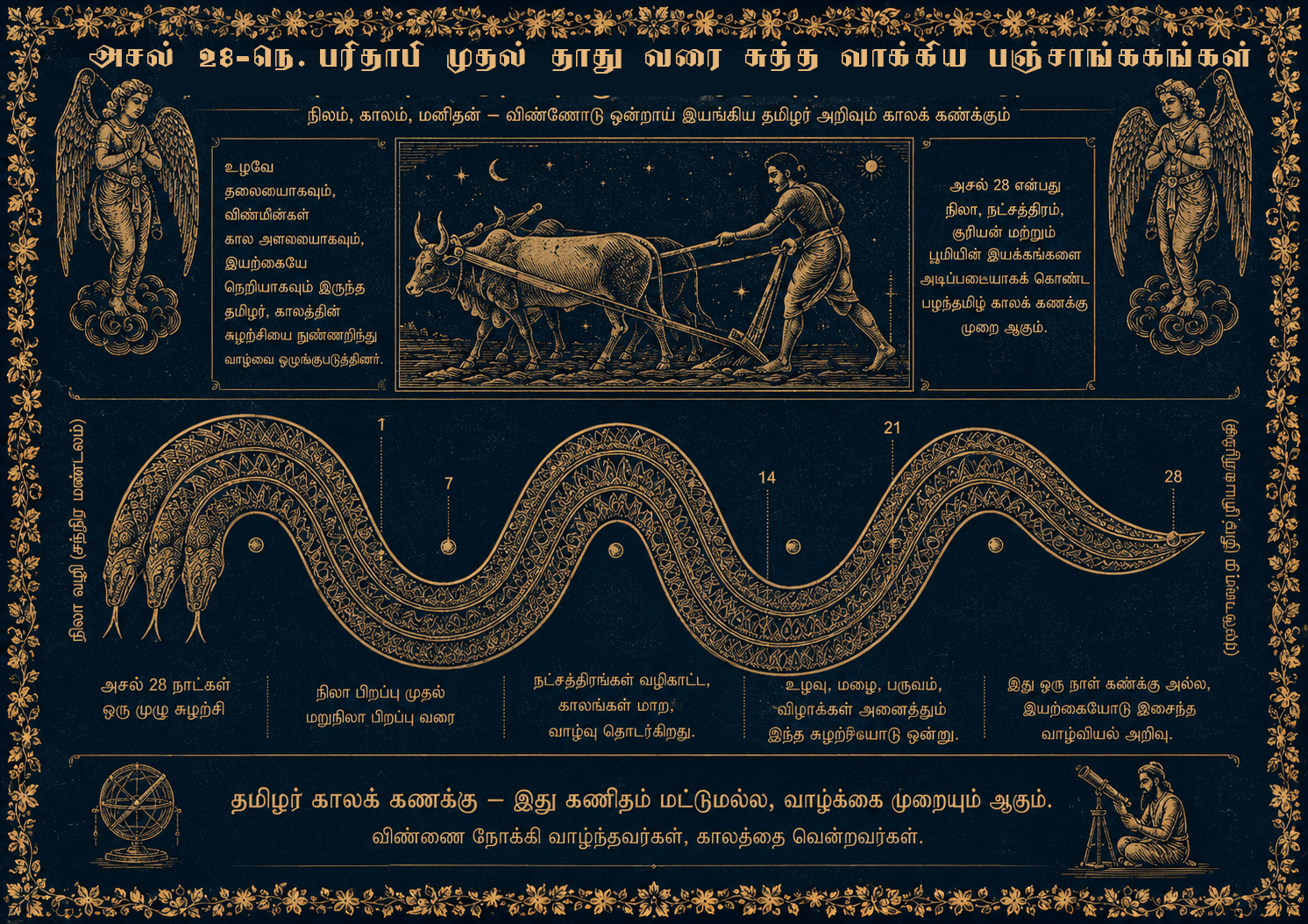
What is a Panchangam?
The word Panchangam (பஞ்சாங்கம்) comes from two Sanskrit roots: pancha (five) and anga (limb). It is a Tamil almanac that records five daily astronomical values — together, these five "limbs" describe the quality of every moment in time:
| # | Tamil Name | Meaning | Description |
|---|---|---|---|
| 1 | Tithi (திதி) | Lunar day | The Moon's position relative to the Sun. Changes every ~24 hours. 30 Tithis in a lunar month. |
| 2 | Vara (வார) | Day of the week | Sunday to Saturday — each day ruled by a planet (Sun, Moon, Mars, Mercury, Jupiter, Venus, Saturn). |
| 3 | Nakshatra (நட்சத்திரம்) | Lunar mansion | Which of the 27 star-houses the Moon occupies. Changes every ~24–26 hours. |
| 4 | Yoga (யோகம்) | Sun-Moon angle | The combined longitude of the Sun and Moon divided into 27 equal parts. Governs the quality of the day. |
| 5 | Karanam (கரணம்) | Half-tithi | Half of a Tithi — there are 11 types, cycling through each lunar month. Used for precise muhurta timing. |
Every single festival, wedding date, thread ceremony, housewarming, and auspicious moment in Tamil tradition is timed using these five values. The Panchangam is not merely a calendar — it is a complete astronomical map of time.
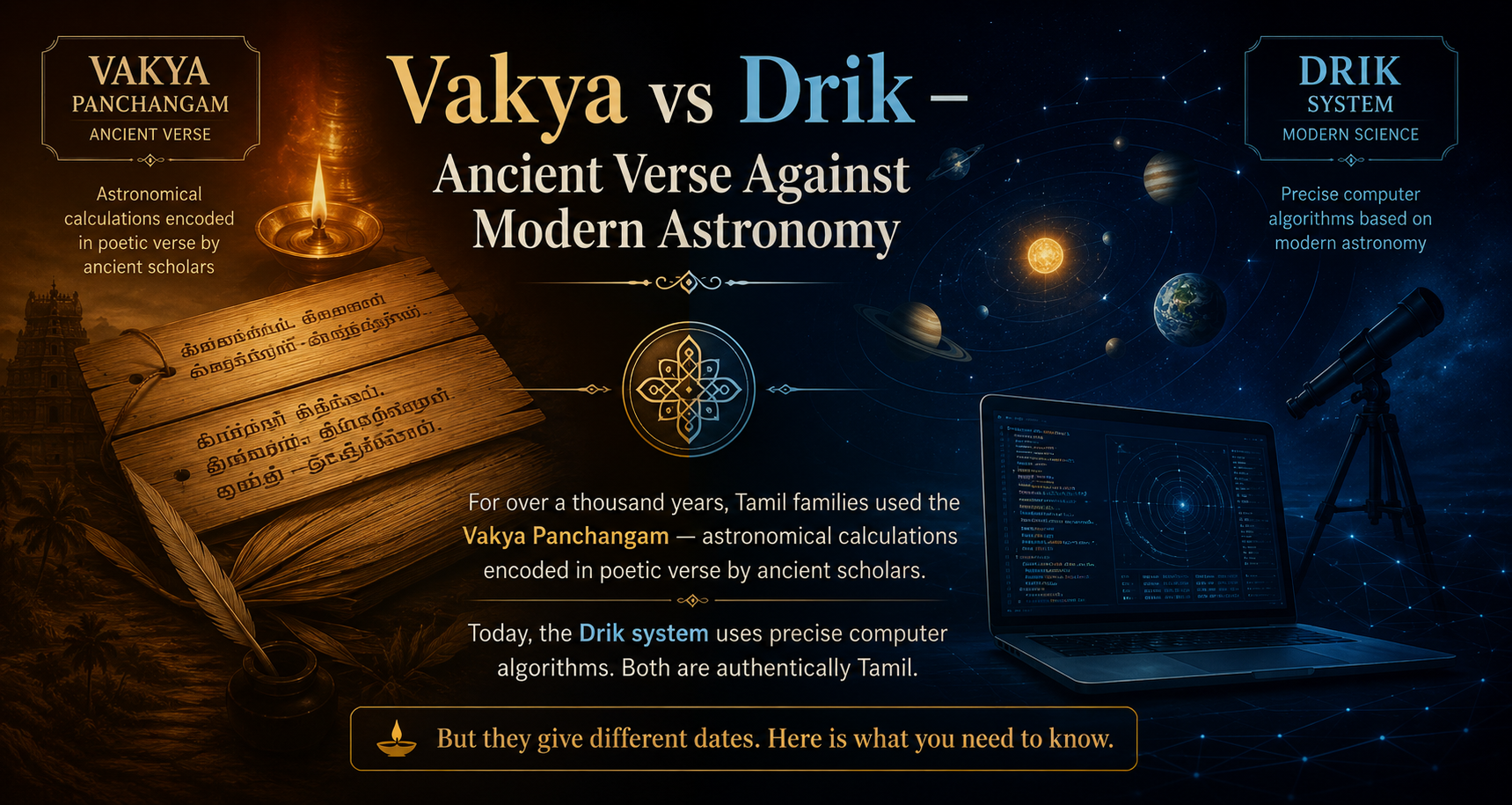
The Vakya Panchangam — Poetry as Astronomy
The word Vakya (வாக்கிய) means "sentences" or "verses." The Vakya Panchangam is based on a remarkable ancient method: Tamil astronomers encoded complex mathematical calculations for the positions of the Sun, Moon, and planets into memorisable poetic verses.
Written primarily during the period 500–700 AD by scholars in the tradition of Aryabhata and the later Tamil Siddhanta texts, these verses allowed trained priests and astrologers to compute the entire Panchangam by reciting poetry and doing mental arithmetic — no books, no instruments, just memory and verse.
This was an extraordinary achievement. The verses encoded the mean motions of the Moon, corrections for lunar anomaly, solar longitude — all expressed as a series of memorised numbers hidden inside Tamil poetic meter. It is one of the great intellectual accomplishments of ancient Tamil scholarship.
Why encode astronomy in verse? In an era before printing, books were rare and fragile. Poetry could be memorised perfectly and transmitted orally across generations without distortion. Encoding the sky in verse was the ancient world's equivalent of backing up data — but in human memory.
The Accumulated Error Problem
The Vakya formulas were highly accurate when written — perhaps within a fraction of a day. But they contain a fundamental limitation: they are fixed formulas that do not self-correct. Astronomy is not perfectly periodic — small perturbations accumulate over centuries.
Over 1,400 years since the formulas were written, several types of error have built up:
- Lunar mean motion error: The Moon's average speed was measured to high precision in the Siddhanta texts, but not perfectly. Small errors multiply over centuries.
- Anomaly correction errors: The Moon's orbit is elliptical — it speeds up and slows down. The ancient polynomial corrections are approximations that drift over long periods.
- Solar longitude drift: The Sun's position formula has accumulated roughly a 1–2 day error by the 21st century.
The practical result: the Vakya Panchangam is currently approximately 1–2 days behind precise astronomical values. This is why Vakya sometimes gives Tamil New Year on April 15 when the actual astronomical calculation gives April 13 or 14.
The Drik Panchangam — Modern Precision
Drik (திருக்) means "sight" — as in direct observation of the sky. The Drik Panchangam is calculated each year using modern astronomical ephemeris data — the same orbital mechanics used by NASA and international observatories.
Instead of fixed ancient formulas, Drik calculations use the actual current positions of celestial bodies as computed from first principles of orbital mechanics. The result is accuracy to the minute, not the day. The Drik Panchangam never gives April 15 — it always gives April 13 or 14 for Mesha Sankranti, depending on the year.
| Aspect | Vakya Panchangam | Drik Panchangam |
|---|---|---|
| Basis | Ancient poetic verses (~500–700 AD) | Modern astronomical algorithms (NASA-grade) |
| Method | Fixed formulas memorised in verse | Computed fresh each year from orbital data |
| Accuracy today | ~1–2 day accumulated error | Accurate to the minute |
| Tamil New Year | Can give April 14 or April 15 | Always April 13 or 14 (year-dependent) |
| Usage | Most temples, traditional households | Official Government of Tamil Nadu almanac; modern astrologers |
| Cultural standing | Deep traditional authority | Scientifically authoritative |
| Self-correcting? | No — formulas are fixed | Yes — recalculated every year |
Which Should You Follow?
This is both an astronomical and a cultural question, and Tamil scholars have debated it for decades. Here is the nuanced answer:
- For official dates (government holidays, etc.): The Tamil Nadu government uses the Drik-based calculation. April 14 is confirmed annually using modern astronomy.
- For personal and temple use: Many families follow Vakya out of tradition and respect for its historical authority — this is entirely valid as a cultural practice.
- For precise muhurta (auspicious timing): Drik is recommended. A 1–2 day error in Tithi or Nakshatra can shift the most auspicious moment significantly.
- For understanding the debate: Recognise that both systems are authentically Tamil. Vakya represents a brilliant achievement of ancient scholarship; Drik represents its natural evolution into the modern age.
The wisest position: Honour the Vakya tradition for its extraordinary cultural and intellectual heritage — the encoding of the cosmos in Tamil verse is one of humanity's great achievements. Use the Drik calculations when astronomical precision matters. The two are not enemies; they are the ancient and modern faces of the same Tamil astronomical tradition.
The 350-Year Frozen Date — A Calculation
A question that often surfaces in calendar reform discussions: the Tamil New Year date was administratively fixed around 1675 AD and precession has continued uninterrupted since then — so what would the astronomically correct Mesha Sankranti be today, if the date had never been frozen?
The answer lies in a straightforward calculation. Precession drifts at 50 arc-seconds per year — the equivalent of one calendar day every 72 years. Over the 351 years between 1675 AD and 2026 AD, that accumulates to roughly 4.9 degrees, or just under 5 calendar days of additional shift relative to the Gregorian calendar.
April 14 + 5 days = approximately April 19. This is the date sidereal Mesha Sankranti would fall on today if the administrative calendar had continued shifting forward with precession from that 1675 baseline. The commonly cited figure of "April 20" is directionally correct — off by roughly one day. That one-day gap will close in approximately 2096 AD, when another 70 years of precession make April 20 precisely accurate.
| Step | Calculation | Result |
|---|---|---|
| Years elapsed | 2026 − 1675 | 351 years |
| Precession in degrees | 351 × 50″ ÷ 3600 | 4.88° |
| Convert to days | 4.88° × (365.25 ÷ 360) | 4.94 days |
| Add to frozen date | April 14 + 4.94 days | ≈ April 19 |
| When April 20 becomes correct | April 19 + 1 day at 72 yrs/day | ~2096 AD |
Critical distinction: The modern Drik Panchangam recalculates Mesha Sankranti from scratch every year using current ephemeris data. It already gives April 13 or 14 — never April 15 — precisely because it is never frozen. The ~5-day gap described above applies only to the Vakya Panchangam formulas and the fixed administrative holiday date, both of which have not been meaningfully updated since the 17th century. The Drik system has no such problem; it is self-correcting by design.
The Five Siddhanta Texts
The Vakya Panchangam traces its lineage to five great ancient astronomical treatises called the Pancha Siddhanta — the five foundational systems of Indian/Tamil astronomy:
- Surya Siddhanta — The solar system text; the most influential, still used today for traditional calculations.
- Aryabhatiya (499 AD) — Aryabhata's revolutionary text introducing the rotation of Earth and more precise orbital parameters.
- Brahmasphutasiddhanta (628 AD) — Brahmagupta's text introducing zero and negative numbers into astronomical calculation.
- Romaka Siddhanta — Showing awareness of Hellenistic Greek astronomical knowledge.
- Paulisha Siddhanta — Showing awareness of Babylonian astronomical knowledge.
Tamil astronomy was never isolated. These texts show a rich tradition of absorbing, comparing, and improving on astronomical knowledge from across the ancient world — from Babylon to Greece to South India.
பஞ்சாங்கம் என்றால் என்ன?
பஞ்சாங்கம் என்ற சொல் இரண்டு வேர்ச்சொற்களிலிருந்து வருகிறது: பஞ்ச (ஐந்து) மற்றும் அங்க (உறுப்பு). இது தமிழ் வானியல் நாட்காட்டி — ஒவ்வொரு நாளும் ஐந்து வானியல் மதிப்புகளை பதிவு செய்கிறது. இந்த ஐந்து "உறுப்புகள்" காலத்தின் ஒவ்வொரு தருணத்தின் தன்மையை விவரிக்கின்றன.
வாக்கிய பஞ்சாங்கம் — கவிதையாக வானியல்
வாக்கியம் என்றால் "வாக்கியங்கள்" அல்லது "பாடல் வரிகள்." வாக்கிய பஞ்சாங்கம் ஒரு அற்புதமான பண்டைய முறையை அடிப்படையாக கொண்டது: தமிழ் வானியலாளர்கள் சூரியன், சந்திரன், கிரகங்களின் நிலைகளுக்கான சிக்கலான கணித கணக்கீடுகளை மனனம் செய்யக்கூடிய கவிதை வரிகளாக மாற்றினர்.
முதன்மையாக 500–700 கி.பி காலகட்டத்தில் ஆர்யபட்ட மரபு மற்றும் பிற்கால தமிழ் சித்தாந்த நூல்களின் மரபில் எழுதப்பட்ட இந்த வாக்கியங்கள், பயிற்சி பெற்ற புரோகிதர்கள் மற்றும் ஜோதிடர்களுக்கு — கவிதை ஓதியும் மன கணக்கீடு செய்தும் — முழு பஞ்சாங்கத்தையும் கணக்கிட உதவின.
ஏன் வானியலை கவிதையில் பதிவு செய்தார்கள்? அச்சு இல்லாத காலத்தில் புத்தகங்கள் அரிதானவை. கவிதையை மனனம் செய்து, தலைமுறை தலைமுறையாக வாய்மொழியாக அனுப்ப முடியும். வானியல் கணக்கை கவிதையில் பதிக்கிறது என்பது தரவை மனித நினைவகத்தில் காப்புப் பிரதி எடுப்பதற்கு சமம்.
திரண்ட பிழை சிக்கல்
வாக்கிய சூத்திரங்கள் எழுதப்பட்ட காலத்தில் மிகவும் துல்லியமானவை — ஒரு நாளின் ஒரு பகுதி வரை கூட சரியாக இருந்தன. ஆனால் அவை நிலையான சூத்திரங்கள் — தன்னைத்தானே சரிசெய்துகொள்வதில்லை. வானியல் நிகழ்வுகள் மிகச் சரியான மீண்டும் மீண்டும் திரும்பல் கொண்டவை அல்ல — சிறிய கலைப்புகள் நூற்றாண்டுகளாக திரளும்.
சூத்திரங்கள் எழுதப்பட்டு 1,400 ஆண்டுகளுக்குப் பிறகு, பல வகை பிழைகள் திரண்டுள்ளன. நடைமுறை விளைவு: வாக்கிய பஞ்சாங்கம் தற்போது துல்லியமான வானியல் மதிப்புகளிலிருந்து தோராயமாக 1–2 நாட்கள் பின்தங்கியுள்ளது.
திருக்கணித பஞ்சாங்கம் — நவீன துல்லியம்
திருக் என்றால் "பார்வை" — நேரடி வான் கவனிப்பு என்று பொருள். திருக்கணித பஞ்சாங்கம் ஒவ்வொரு ஆண்டும் நவீன வானியல் தரவைப் பயன்படுத்தி கணக்கிடப்படுகிறது — நாசா மற்றும் சர்வதேச கண்காணிப்பு நிலையங்கள் பயன்படுத்தும் அதே சுற்றுவட்ட இயக்கவியல்.
பழைய நிலையான சூத்திரங்களுக்கு பதிலாக, திருக்கணித கணக்கீடுகள் சுற்றுவட்ட இயக்கவியலின் முதல் கோட்பாடுகளிலிருந்து கணக்கிடப்பட்ட வான் பொருட்களின் உண்மையான நிலைகளைப் பயன்படுத்துகின்றன. திருக்கணித பஞ்சாங்கம் ஒருபோதும் ஏப்ரல் 15 தரவது இல்லை.
350 ஆண்டு நிலைநிறுத்தப்பட்ட தேதி — ஒரு கணக்கீடு
நாட்காட்டி சீர்திருத்த விவாதங்களில் அடிக்கடி எழும் கேள்வி: தமிழ் புத்தாண்டு தேதி 1675 கி.பி அளவில் நிர்வாக ரீதியாக நிலைநிறுத்தப்பட்டிருந்தால், அதன்பிறகும் முன்சரிவு தொடர்ந்திருப்பதால், தேதி ஒருபோதும் நிலைநிறுத்தப்படாமல் இருந்திருந்தால் இன்று சரியான தேதி எது?
கணக்கீடு எளிதானது. முன்சரிவு ஆண்டுக்கு 50 arc-seconds வேகத்தில் நகர்கிறது — அதாவது ஒவ்வொரு 72 ஆண்டுகளுக்கும் ஒரு நாள். 1675 முதல் 2026 வரை 351 ஆண்டுகளில் இது சுமார் 4.9 டிகிரி, அதாவது கிட்டத்தட்ட 5 நாட்கள் திரண்டுள்ளது.
ஏப்ரல் 14 + 5 நாட்கள் = தோராயமாக ஏப்ரல் 19. பரவலாக குறிப்பிடப்படும் "ஏப்ரல் 20" என்ற எண்ணிக்கை சரியான திசையில் உள்ளது — ஆனால் ஒரு நாள் தள்ளியது. அந்த தேதி சரியாக இருக்கும் காலம் 2096 ஆம் ஆண்டளவில், மேலும் 70 ஆண்டு முன்சரிவுக்குப் பிறகு.
முக்கியமான வேறுபாடு: நவீன திருக்கணித பஞ்சாங்கம் ஒவ்வொரு ஆண்டும் புதிதாக கணக்கிடுகிறது. அது எப்போதும் ஏப்ரல் 13 அல்லது 14 மட்டுமே தருகிறது — ஏனென்றால் அது நிலைநிறுத்தப்படவில்லை. மேலே சொன்ன 5 நாள் வேறுபாடு வாக்கிய பஞ்சாங்கம் மற்றும் நிர்வாக விடுமுறை தேதிக்கு மட்டுமே பொருந்தும்.
எதை பின்பற்ற வேண்டும்?
- அரசு விடுமுறைகளுக்கு: தமிழ்நாடு அரசு திருக்கணித கணக்கீட்டைப் பயன்படுத்துகிறது. ஆண்டுதோறும் ஏப்ரல் 14 நவீன வானியல் மூலம் உறுதிப்படுத்தப்படுகிறது.
- தனிப்பட்ட மற்றும் கோயில் பயன்பாட்டிற்கு: பல குடும்பங்கள் மரபு மற்றும் வரலாற்று அதிகாரத்திற்கான மரியாதையில் வாக்கியத்தைப் பின்பற்றுகின்றன — இது கலாச்சார நடைமுறையாக முழுமையும் சரியானது.
- துல்லியமான முகூர்த்தத்திற்கு: திருக்கணிதம் பரிந்துரைக்கப்படுகிறது.
மிகவும் ஞானமான நிலைப்பாடு: வாக்கிய மரபை அதன் அசாதாரண கலாச்சார மற்றும் அறிவுசார் பாரம்பரியத்திற்காக மதியுங்கள். வானியல் துல்லியம் முக்கியமாக இருக்கும்போது திருக்கணித கணக்கீடுகளைப் பயன்படுத்துங்கள். இவை இரண்டும் ஒரே தமிழ் வானியல் மரபின் பண்டைய மற்றும் நவீன முகங்கள்.
ஐந்து சித்தாந்த நூல்கள்
வாக்கிய பஞ்சாங்கம் பஞ்ச சித்தாந்தம் என்ற ஐந்து பெரிய பண்டைய வானியல் நூல்களிலிருந்து வருகிறது:
- சூர்ய சித்தாந்தம் — சூரிய மண்டல நூல்; மிகவும் செல்வாக்கு மிக்கது, இன்றும் மரபு கணக்கீடுகளுக்கு பயன்படுத்தப்படுகிறது.
- ஆர்யபட்டியம் (499 கி.பி) — பூமியின் சுழற்சியை அறிமுகப்படுத்திய ஆர்யபட்டாவின் நூல்.
- பிரம்மஸ்புட சித்தாந்தம் (628 கி.பி) — வானியல் கணக்கீட்டில் சுழியம் மற்றும் எதிர்மறை எண்களை அறிமுகப்படுத்திய பிரம்மகுப்தாவின் நூல்.
- ரோமக சித்தாந்தம் — ஹெலனிஸ்டிக் கிரேக்க வானியல் அறிவின் விழிப்புணர்வை காட்டுகிறது.
- பௌலிஷ சித்தாந்தம் — பாபிலோனிய வானியல் அறிவின் விழிப்புணர்வை காட்டுகிறது.
தமிழ் வானியல் ஒருபோதும் தனிமையில் இல்லை. இந்த நூல்கள் பாபிலோன் முதல் கிரீஸ் வரை, தென்னிந்தியா வரை உலகெங்கும் உள்ள வானியல் அறிவை உறிஞ்சி, ஒப்பிட்டு, மேம்படுத்திய ஒரு செழிப்பான மரபைக் காட்டுகின்றன.