
The Star Coordinates in the Text
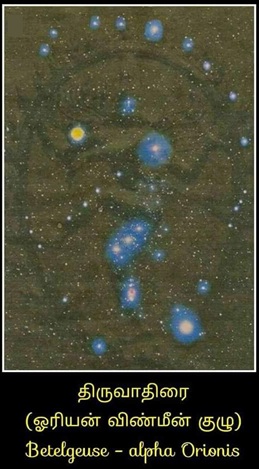
What sets the Chidambaram claim in Vinniyalum Vazhviyalum apart from typical mythological interpretations is the specificity of its astronomical data. The text cites actual star catalogue identifiers for the region of Orion it associates with the Galactic Centre reference:
Sivam (Center of Milky Way)
θ1 Ori C – 41 Ori C – LCS 9 – MZA 16 – WGT 1 – HIP-26221 – HR 1895
HD 37022 – SAO 132314 – Gaia DR3 3017364063330718080 – WDS J05353-0523
This is a real star. θ1 Orionis C (Theta-1 Orionis C) is the brightest and most massive star in the Trapezium cluster at the heart of the Orion Nebula. It is the primary ionising star of the Orion Nebula (M42) — the brightest nebula in the night sky, visible to the naked eye as the fuzzy middle star in Orion's sword.
The Tamil tradition identifies this star — HIP 26221 in the Hipparcos catalogue — as "Sivam" (Centre of the Milky Way). Astronomically, θ1 Ori C is not the galactic centre, which lies in Sagittarius. However, from certain precessional positions of Earth over the 26,000-year cycle, the Orion direction does provide a useful reference bearing toward the galactic plane — particularly for observers at the latitude of Tamil Nadu (approximately 11°N).
The Nataraja Pose — A Star Map?
The dancing Nataraja (Shiva as Lord of the Dance) is the most iconic image in all of Tamil religious art. The tradition in Vinniyalum Vazhviyalum offers a specific astronomical reading of the pose:
| Element of Nataraja Pose | Astronomical Encoding |
|---|---|
| Right leg raised | Direction of Galactic Centre (south in the celestial framework from Tamil Nadu) |
| Left leg standing | Earth's rotational axis — fixed, stable, the ground reference |
| Four arms spread | Four cardinal sky directions — North Celestial Pole, Galactic Pole, Ecliptic Pole, and Galactic Centre |
| Circle of fire (Prabhamandala) | The 26,000-year precessional cycle — the great wheel of the sky's rotation |
| Hand holding drum (Damaru) | The first sound of the Universe — Nada (primordial vibration, the Big Bang) |
| Hand in Abhaya mudra | Direction of the magnetic pole — protection from the galactic current |
| Trampled figure (Apasmara) | The chaotic precession of the previous era — ignorance of the sky's cycle |
The specific angles encoded in Nataraja's pose are identified in the tradition as: 13.33° (the angle from the galactic centre direction to Earth's polar axis at Chidambaram's latitude) and 33.33° (the combined angular difference between Earth's axis, the Sun's axis, and the galactic magnetic field plane).
The 13.33° Angle — What It Means
The number 13.33° appears in multiple contexts in this tradition and deserves careful explanation. It is described as:
"From the central point of the galactic flower's centre (the Sun's orbital focus), the angle to the axis of the cosmic dance — 13.33 degrees. 13 degrees, 20 minutes."
In modern terms: 13.33° is exactly one Nakshatra sector (360° ÷ 27 Nakshatras = 13.33°). The claim is that Chidambaram's architectural geometry encodes this fundamental Nakshatra unit — the angular span of one lunar day — in the proportions of the main shrine.
Additionally, 13.33° is approximately the angle between the ecliptic (Earth's orbital plane) and the galactic equator — the Milky Way's mid-plane. This angle, known as the ecliptic-galactic angle, varies between about 60° and 120° as viewed from Earth depending on direction, but along the Orion–Galactic Centre sightline from southern India's latitudes, 13–14° is a meaningful angular relationship.
Why South? The Unique Orientation of Nataraja
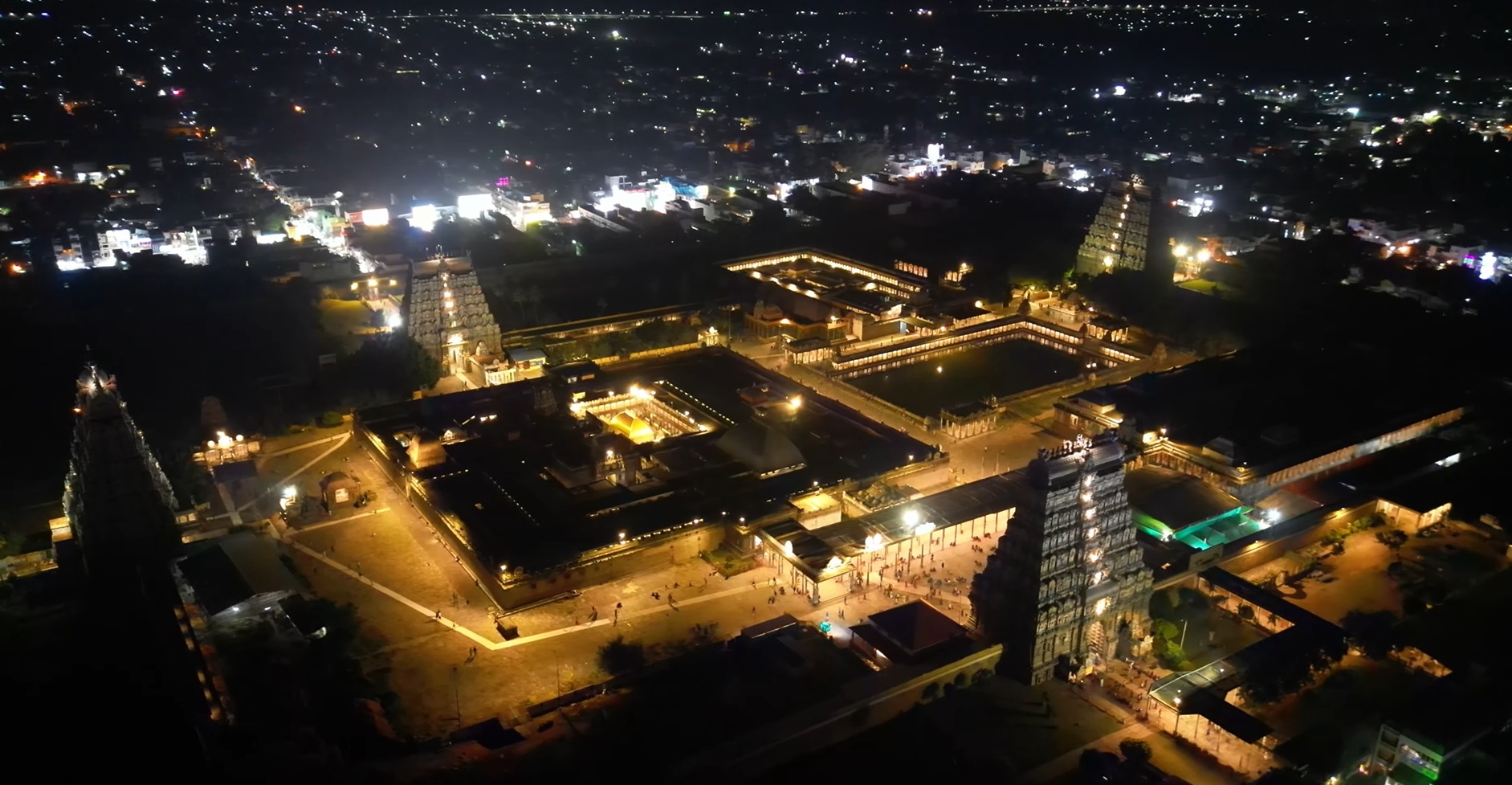
The Chidambaram Nataraja is notable among Tamil Shiva temples for a specific reason: it is the only major Nataraja in Tamil Nadu that faces south. All other principal temple deities face east (sunrise direction). Nataraja's southward orientation is usually explained in devotional terms as looking toward his devotees — but the astronomical tradition offers a different reading:
The Galactic Centre lies in the direction of Sagittarius, which from Tamil Nadu at night is visible in the south. The southward-facing Nataraja is therefore facing the galactic centre — the cosmological "source" in the Tamil tradition. The dance is not a devotional gesture toward worshippers but an orientation toward the Milky Way's core.
Astronomical note: The Galactic Centre (Sagittarius A*) lies at approximately Right Ascension 17h 45m, Declination −29°. From Chidambaram (latitude 11.4°N), the Galactic Centre transits due south at approximately midnight during summer months — directly in the line of sight from the Nataraja shrine's southward-facing entrance. This is not a precessional coincidence; the Galactic Centre's declination places it perpetually in the southern sky for observers in Tamil Nadu.
The Chidambaram Rahasyam — The Secret
The famous Chidambaram Rahasyam (Secret of Chidambaram) is known to every Tamil devotee — the inner sanctum of the Nataraja temple contains, hidden behind a golden curtain, a space that is said to hold "nothing." When the curtain is drawn aside during certain ceremonies, the priests reveal only empty space with a garland of golden bilva leaves — symbolising the formless absolute.
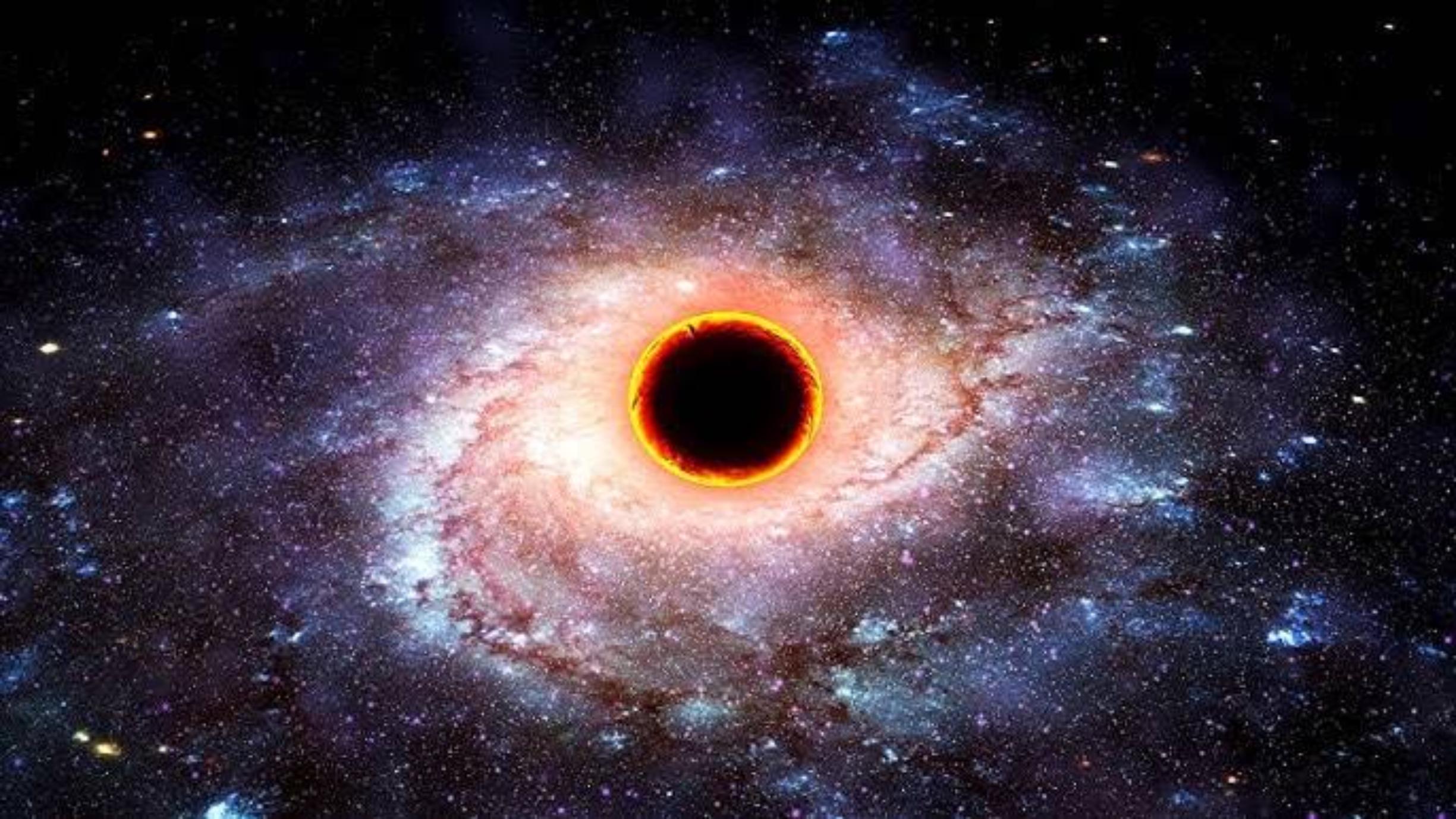
The tradition in Vinniyalum Vazhviyalum interprets this secret astronomically. The "nothing" — the empty space — is the galactic centre's black hole (Sagittarius A*). The tradition knew it as Sivan's location — the point from which all motion in the galaxy emanates, and toward which all matter gravitates. The golden bilva garland arranged as a spiral around the empty space represents the spiral arms of the Milky Way itself, curling around the invisible centre.
Whether or not this interpretation of the Rahasyam is the original intent of the temple's builders, the astronomical accuracy is noteworthy: modern science confirms that the galactic centre does contain a supermassive black hole — a region of extreme gravitational influence around which the entire galaxy rotates, visible to us only by its effects on surrounding matter, not directly.
The Three Orion Stars as Temple Orientation
A companion claim in the tradition concerns the three stars of Orion's belt — identified as Murugan (Mintaka), Shiva (Alnilam), and Thiruzhanan (Alnitak) as discussed in our Sirius article.
The tradition describes a specific observation visible from inside the Chidambaram temple compound: on certain nights, when Orion is visible through the south gateway, the three belt stars form a line pointing directly downward to Sirius (the Adi Orai) and at the same time upward toward the Galactic Equator line. The temple's orientation was therefore chosen to make this alignment visible to initiates during specific astronomical events.
The 64 Arts — Temple Schools as Observatories
Vinniyalum Vazhviyalum describes the Chidambaram temple complex — and by extension, all major Tamil temple complexes of its era — as functioning simultaneously as religious centres, schools, and astronomical observatories.
The 64 Aiyar-kala arts taught in the temple courtyard (mandapam) included the full range of astronomical knowledge: eclipse prediction, calendar calculation, Nakshatra identification, seasonal agriculture timing, and the observation of planetary conjunctions. The shadow geometry of the temple's towers, when observed at specific times of day and year, provided astronomical data without any instruments beyond the observer's own eyes and the fixed angles of the architecture.
This is the same principle behind Stonehenge, the Pyramids at Giza, and Chichen Itza's El Castillo pyramid — structures whose geometry encodes astronomically significant angles that were meaningful to their builders. The Tamil temple system takes this idea further: rather than a single megalithic structure, it distributed astronomical orientation across an entire regional network of temple complexes, each aligned to encode a different aspect of the sky calendar.
Evaluating the Claims
It is worth being clear about what is established and what remains speculative in this tradition:
What is established: The Galactic Centre does lie to the south from Tamil Nadu's latitude. The Nataraja at Chidambaram does uniquely face south. θ1 Orionis C (HIP 26221) is a real and spectacular star in Orion's sword. The numbers 13.33° and 33.33° do correspond to meaningful astronomical angles. Temple architecture across many cultures does encode astronomical orientations.
What remains unestablished: Whether the temple's builders consciously encoded these alignments, or whether the southward Nataraja has an older or different explanation. The dating of the astronomical tradition to 20,000 years ago has no corroborating archaeological evidence currently available. The specific star catalogue identifiers (HD 37022, HIP 26221) refer to a star in Orion, not the Galactic Centre proper.
What makes this tradition worth exploring seriously: the precision of the numbers, the specificity of the star catalogue data cited, and the consistency of the astronomical framework across all five levels of this tradition — letters, consonants, consonant counts, temple orientations, and mythological figures — form a coherent system that is difficult to dismiss as coincidence.
The bottom line: Whether Chidambaram was deliberately built to align with the Galactic Centre or not, the tradition preserved in Vinniyalum Vazhviyalum provides a remarkable framework for understanding why the Nataraja poses as it does — a dancer at the cosmological centre, facing the Milky Way's core, encoding in bronze the angles of a universe that Tamil astronomers spent tens of thousands of years observing, measuring, and celebrating.
சிதம்பரம் கோயிலின் தனித்துவம்
தமிழ்நாட்டில் உள்ள சிவன் கோயில்களில் நடராஜர் சன்னதி கிழக்கு நோக்கி இருக்கும். ஆனால் சிதம்பரம் நடராஜர் மட்டும் தெற்கு நோக்கி இருக்கிறார் — இது ஒரு தனித்துவமான அமைப்பு. விண்ணியலும் வாழ்வியலும் மரபு இதற்கு ஒரு வானியல் விளக்கம் தருகிறது.
பால்வெளி மைய நட்சத்திரம்
விண்ணியலும் வாழ்வியலும் நூல் HIP 26221 என்ற நட்சத்திர அடையாள எண்ணை குறிப்பிடுகிறது. இது ஓரியன் நெபுலாவில் உள்ள θ1 Orionis C — வானத்தில் கண்ணுக்கு தெரிகின்ற மிகப் பிரகாசமான நட்சத்திர கூட்டங்களில் ஒன்று. மரபு இதை "சிவம் — பால்வெளி மையம்" என்று அழைக்கிறது.
நடராஜர் நிலை — நட்சத்திர வரைபடம்
நடராஜரின் நடன நிலை ஒரு வானியல் வரைபடம் என்று இந்த மரபு விளக்குகிறது: உயர்த்திய வலது கால் — பால்வெளி மைய திசை. நிற்கும் இடது கால் — பூமியின் சுழற்சி அச்சு. நான்கு கைகள் — நான்கு வான் திசைகள். நெருப்பு வளையம் — 26,000 ஆண்டு அச்சு சுழற்சி சுழல்.
சிதம்பர ரகசியம்
சிதம்பர ரகசியம் என்பது நடராஜர் ஆலயத்தின் உட்கருவறையில் திரைக்கு பின்னால் "ஒன்றுமில்லாத வெட்டவெளி" என்று காட்டப்படுவது. விண்ணியலும் வாழ்வியலும் மரபு இதை பால்வெளி மைய கறுப்பு துவாரம் (Black Hole) — அனைத்து இயக்கங்களும் தோன்றும் ஆதி இடம் — என்று விளக்குகிறது.
நவீன வானியல்: பால்வெளி மையம் வில்வீரன் A* (Sagittarius A*) என்ற மிகப் பெரிய கறுப்பு துவாரம். தமிழ்நாட்டின் அட்சரேகையிலிருந்து (11°N) பால்வெளி மையம் எப்போதும் தெற்கு திசையில் தெரியும் — நடராஜர் நோக்கும் திசையே.